Maintenance management
The practical maintenance management guide
How reporting, routing and follow-up actually work in a busy property, and where most teams lose the hours.
Mend team · 12 August 2026 · 12 min read

Most maintenance problems are not repair problems. They are capture problems. Something breaks, someone mentions it, and the detail never makes it into a system anyone can act on.
Start with how issues get reported
Staff will use whatever is fastest. If that is a text message to a supervisor, that is your system, whether you like it or not. The fix is not more training, it is a reporting path that takes seconds: plain language, a photo, done.
Once capture is easy, volume goes up. That feels like more problems, but it is simply the work you were already carrying, finally visible.
Route work without a meeting
Each report needs three things before it can move: what it is, where it is, and who owns it. Sorting by trade and urgency at the point of capture removes almost all of the back and forth later.
- Urgent and safety related: assign immediately, notify the manager.
- Standard repairs: batch by trade so one visit clears several jobs.
- Cosmetic and low impact: schedule against the next planned visit.
Follow up automatically
Chasing is the single biggest time sink for property teams. Automatic nudges on stale jobs remove the awkward phone calls and keep contractors accountable without anyone playing bad cop.
Turn closed jobs into intelligence
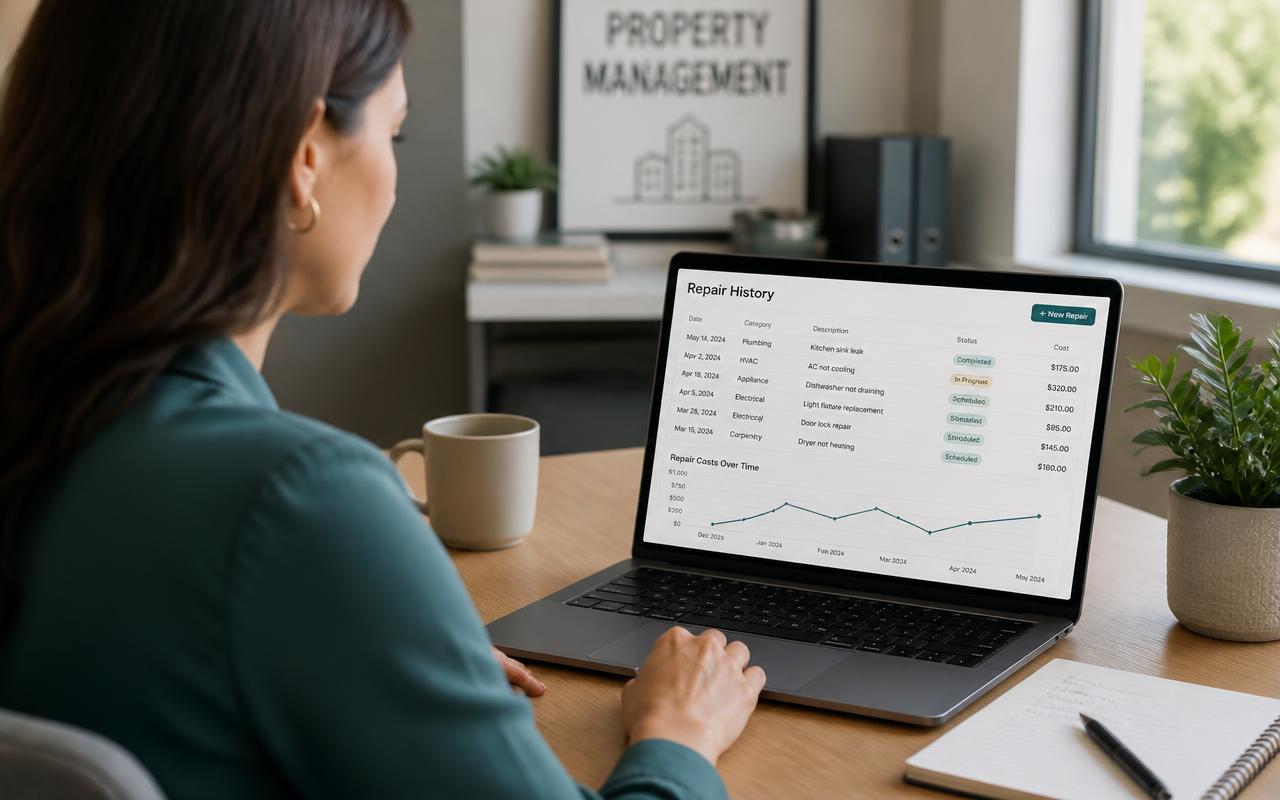
A closed job is only useful if you can find it again. Tag work to an asset and a location, and patterns show up on their own: the same unit failing every quarter, one site absorbing a third of the budget, one trade always running late.